Living in China
Chinese for moving to China
Updated
After you move to China, daily life is many short talks in Mandarin: the shop downstairs, the fruit stall, the pharmacy, neighbours in the stairwell. Your employer helps with the flat and the visa, not with these. A partner without a job often has more of these talks than the one who works. This page covers them, with the phrases for each.
Everyday situations
-
The shop downstairs
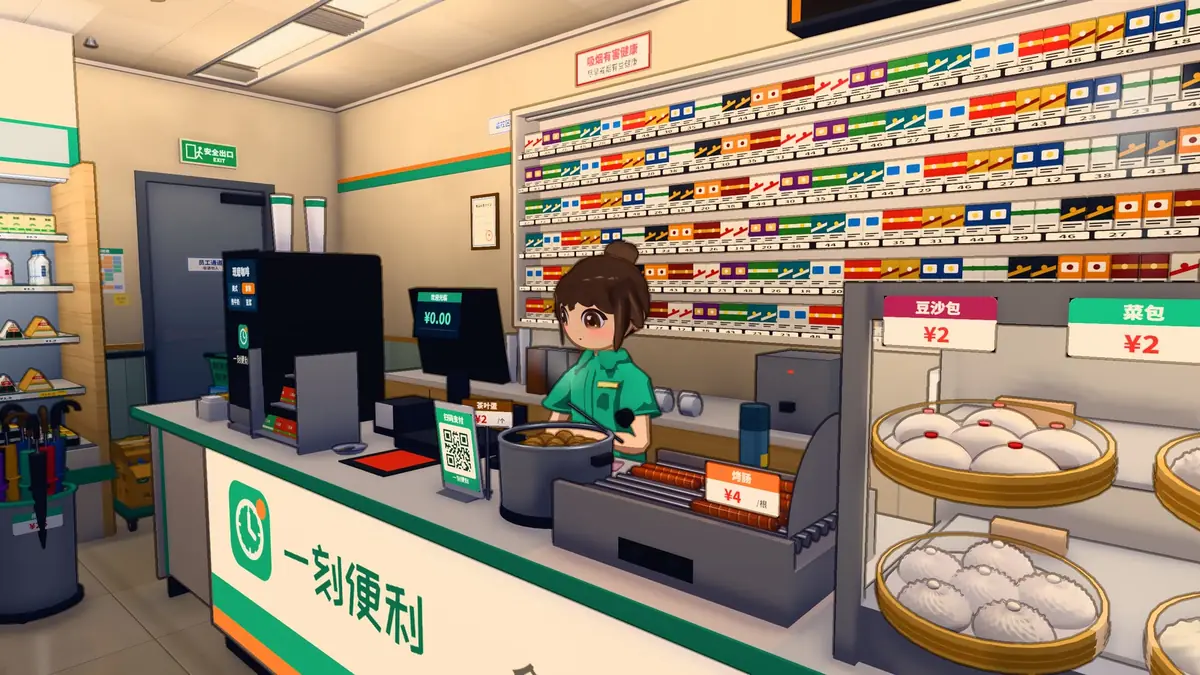
You go to a convenience store most days. The cashier asks three quick questions, one after another: heat it up, a bag, and how you will pay.
-
Buying by weight
Fruit shops and markets sell food by weight. Prices are per 斤 (jin), and one jin is 500 grams. You ask the price per jin, then say how many jin you want.
-
The pharmacy
For a minor illness, many people go straight to a pharmacy. The pharmacist asks what is wrong and what you ate, then explains the medicine, often fast.
-
Neighbours
You may meet an older neighbour with heavy shopping in the stairwell or lift. Offer to help. They will often start chatting.
-
When something is lost
If you leave your phone in a taxi or a park, ask at your building’s front desk, then report it at the local police station. They ask when, where, and what it looks like.
Phrases to learn
- 我先看看。 (wǒ xiān kàn kan.) I'll take a look first.
Say it when you walk up to a stall and are not ready to buy. It tells the seller you are just looking.
They may say 随便看! (suí biàn kàn!) Look as much as you like! - 苹果一斤多少钱? (píng guǒ yì jīn duō shao qián?) How much is one jin of apples?
Use it to ask the price per jin. 苹果 (apples) is the fruit. Put in the name of what you are buying.
- 两斤。 (liǎng jīn.) Two jin (1 kg).
Say it to tell the seller how much you want.
They may say 就这些? (jiù zhè xiē?) Just these? - 不要 (bú yào) No, thanks
Say it to each offer you do not want at the checkout: heating, a bag, a receipt.
They may say 要袋子吗? (yào dài zi ma?) Want a bag? - 药店在哪里? (yào diàn zài ná li?) Where is a pharmacy?
Ask the front desk or someone in the street where the nearest pharmacy is.
- 一天几次? (yì tiān jǐ cì?) How many times a day?
Ask it to check how many times a day to take the medicine.
They may say 一天三次。 (yì tiān sān cì.) Three times a day. - 需要帮助吗? (xū yào bāng zhù ma?) Do you need help?
Ask a neighbour with heavy bags if they need help.
They may say 哎哟,不用不用,太麻烦你了! (āi yō, bú yòng bú yòng, tài má fan nǐ le!) Oh my, no need, no need! Too much trouble for you! (People often say no the first time to be polite. Offer again.) - 我的手机丢了。 (wǒ de shǒu jī diū le.) My phone is lost.
Say it at the front desk or at the police station.
They may say 什么时候丢的? (shén me shí hou diū de?) When was it lost?
The pinyin shows how the words are really said, as in the game.
Where to practise it in the game
The week in the game includes most errands from a first month in China.
The convenience store
You buy lunch. The cashier talks too fast, and an older woman needs something from the top shelf. Then it pours with rain, and you go back to the counter to buy an umbrella.
The fruit shop
You buy fruit as a gift for a family lunch. You look around, ask the price per jin, ask if the fruit is sweet, say how many jin, and say that is all.
The stairwell
An older woman is struggling with her shopping. You ask if she needs help, carry it up five floors and answer her questions on the way.
Pharmacy and police station
A stomach ache sends you to a pharmacy. The pharmacist explains the medicine twice, once fast and once slowly. Another morning, you report a lost phone at the local police station.
Practical tips
-
Register your address
If you do not live in a hotel, you must register your address with the local police within 24 hours of arriving, and again after you move. You usually need your passport and your lease. Landlords and employers often help. Since September 2026, you can also register online, in the National Immigration Administration’s NIA 12367 app or website.
-
Get a local phone number
Food delivery, ride-hailing, bike sharing and many building systems are much easier with a Chinese mobile number.
-
Know the jin
One 斤 (jin) is 500 grams. If a sign says 10 yuan per jin, a kilo costs 20 yuan.
-
For partners: go to the same places
Go to the same stall, shop and café every week, and the people there get to know you. Short, regular chats with the same people are easy practice.
Questions
Do expats in China need to speak Chinese?
Not to get by. Expats live in big Chinese cities with little Chinese, using apps and help from colleagues. But everyday life is in Mandarin: shops, markets, pharmacies, neighbours and deliveries. Basic spoken phrases let you do these things on your own.
What is the most useful Chinese for living in China?
Five kinds of phrases cover most days. 1. Prices and amounts: 多少钱 (how much), 一斤 (one jin). 2. Polite refusals: 不要 (don’t want), 不用了 (no need). 3. Asking where things are: 在哪里 (where is). 4. The questions at a checkout. 5. A simple health problem at a pharmacy, like 我肚子疼 (I have a stomach ache).
How do I buy fruit and vegetables by weight in China?
Ask the price per jin, for example 苹果一斤多少钱 (how much is a jin of apples). Then say how many jin: 一斤 (one jin), 两斤 (two jin), 三斤 (three jin). One jin is 500 grams.
What happens if I lose my phone in China?
Tell your hotel or building front desk, then report it at the local police station, a 派出所 (police station). They will ask 什么时候丢的 (when did you lose it), 在哪里丢的 (where did you lose it), and what colour it is.
Is the game useful for a partner who is not working in China?
Yes. Very Chinese Time in My Life focuses on everyday situations: shops, a pharmacy, neighbours and getting around. A partner without a job in China usually has these talks most often.
Sources
Official pages for the facts on this page. Rules change, so check them before you travel.
- National Immigration Administration: Regulations on filing accommodation registration for foreignersHotels register foreign guests; anyone staying elsewhere registers with the local police within 24 hours.
- National Immigration Administration: Online accommodation registration nationwide (Announcement No. 7 of 2026)Since 21 September 2026 the registration can also be done online: NIA website, NIA 12367 app, WeChat or Alipay mini program.